Most seeds are started indoors about 4 to 8 weeks before last frost, but some favorite flowers and vegetables need a longer head start to perform their best.
If you would like the entire seed sowing roadmap I use, including the seeds discussed here that take 8 to 12 weeks or longer, be sure to also visit When to Start Seeds Indoors (Easy Printable Sowing Plan).
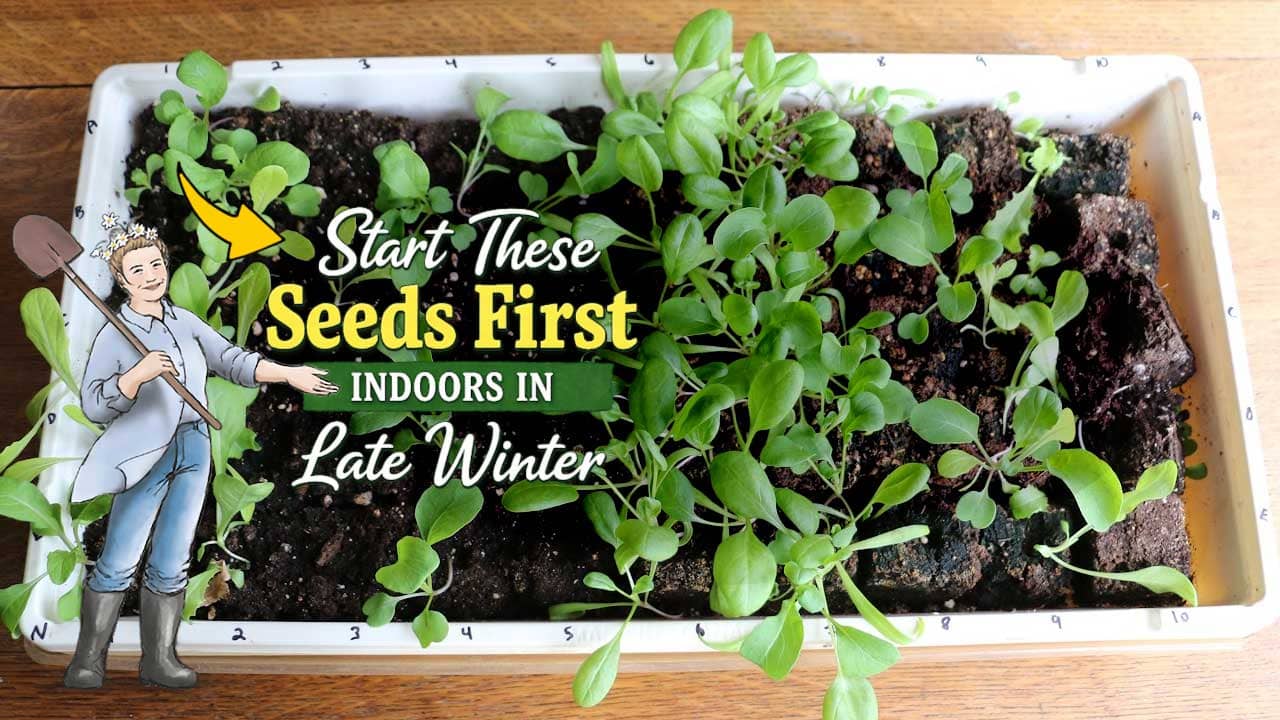
Winter Indoor Seed Sowing
While most indoor seed starting is recommended around 4 to 8 weeks (a month or two) before our anticipated last frost date, and do not benefit from an earlier start, there are some seeds that just need more time.
While starting those fast growers too early can create other problems (root bound plants, insufficient indoor growing space), these slow growers need their seeds started months before outdoor planting time.
It’s so easy to forget about these seeds when winter is blasting us with cold and snow that I keep annual reminders in my calendar to be sure I don’t miss sowing time.
Be sure to visit the Resources section below for how to find your average last frost date and other helpful tips.
1Flowers

In 30 Flower Seeds To Start Indoors (Late Winter & Spring), I grouped perennial and annual flowers by their recommended indoor sowing times to make planning easier.
I particularly like to highlight the slow growers that are easy to miss. These are seeds that, according to the packets, should be started 10 to 12 weeks (or more) before our average last frost.
Examples include beauties like blanket flower (Gaillardia spp.), columbine (Aquilegia spp.), and lobelia (Lobelia spp.).
Some varieties also need pre-sowing treatment—such as a period of cold, moist conditions (“stratification“)—which can push the schedule back even further.
2Vegetables

10 Vegetable Seeds to Start Indoors in Winter Before It’s Too Late
Most vegetables are started indoors a month or two before the last frost, but there are a few popular exceptions that need a longer head start.
This includes some (but not all) varieties of broccoli, celeriac, celery, eggplant, leeks, onions, peppers, and tomatoes. Even within the same species, the time to germinate and grow can vary greatly.
3Start From Scratch
This next group has a few different ideas for indoor winter growing. While clearly impractical compared to buying ready-to-plant plants, there is something so satisfying about starting from scratch and taking some time.
Strawberries From Seed

How to Sow Strawberry Seeds (Indoor Method)
I had always grown new strawberry plants from runners (those shoots that existing strawberry plants send out for this very purpose), but, in recent years, I have experimented with growing strawberry plants from seed.
In part I started because there are countless short videos online (TikTok, Instagram, etc.) deceptively implying that you easily propagate new strawberry plants by planting strawberry fruit. No such luck.
Growing strawberry plants from seed is long, slow process. It starts in winter to allow for a period of cold stratification which you can easily do in the refrigerator, and from there the seeds are sown and eventually germinate.
Sweet Potatoes

How to Propagate Sweet Potatoes to Grow New Slips
I also like to grow new sweet potato plants from store-bought tubers by encouraging them to produce slips. It’s another slow project that’s best started 2 to 3 months before last frost.
Asparagus

This is not a seed starting tutorial but a good reminder that winter is the time to order asparagus crowns for planting.
Crowns are the established roots of asparagus plants. Once planted in your garden, you’ll soon have your own asparagus plants that grow and multiply.
Place an order with a mail-order shop in winter and they ship them at your recommended planting time.
My tutorial shows how they are planted.
Resources
More Sowing Tips
- When to Start Seeds Indoors (Easy Printable Sowing Plan) | This walks through my entire indoor seed starting plan from winter right through to last frost.
- Winter Sowing: Two Reliable Methods for Outdoor Seed Starting | If you’re reading this in the heart of winter, this shares two ways to reliably sow seeds outdoors in late fall or winter for spring germination.
Find Your Frost Dates & Hardiness Zone
Plant Hardiness Zones |  United States |
  Canada
These are listed on seed packets and plant tags to guide your choices.
Average Frost Dates | Use this calculator at Almanac.com. Enter your city and state or province to find your first and last frost dates and number of frost-free days.
Ecoregion | Learn about local native plants, animal species, and environmental conditions to make garden choices that benefit your ecosystem.
Learn More: Understanding Frosts & Freezing For Gardeners
Timing Chart
This is my system for simplifying indoor seed sowing based on your average last frost date.
Seeds are organized into sowing groups (1,2,3,4,5) based on the recommended sowing time listed on the seed packets.
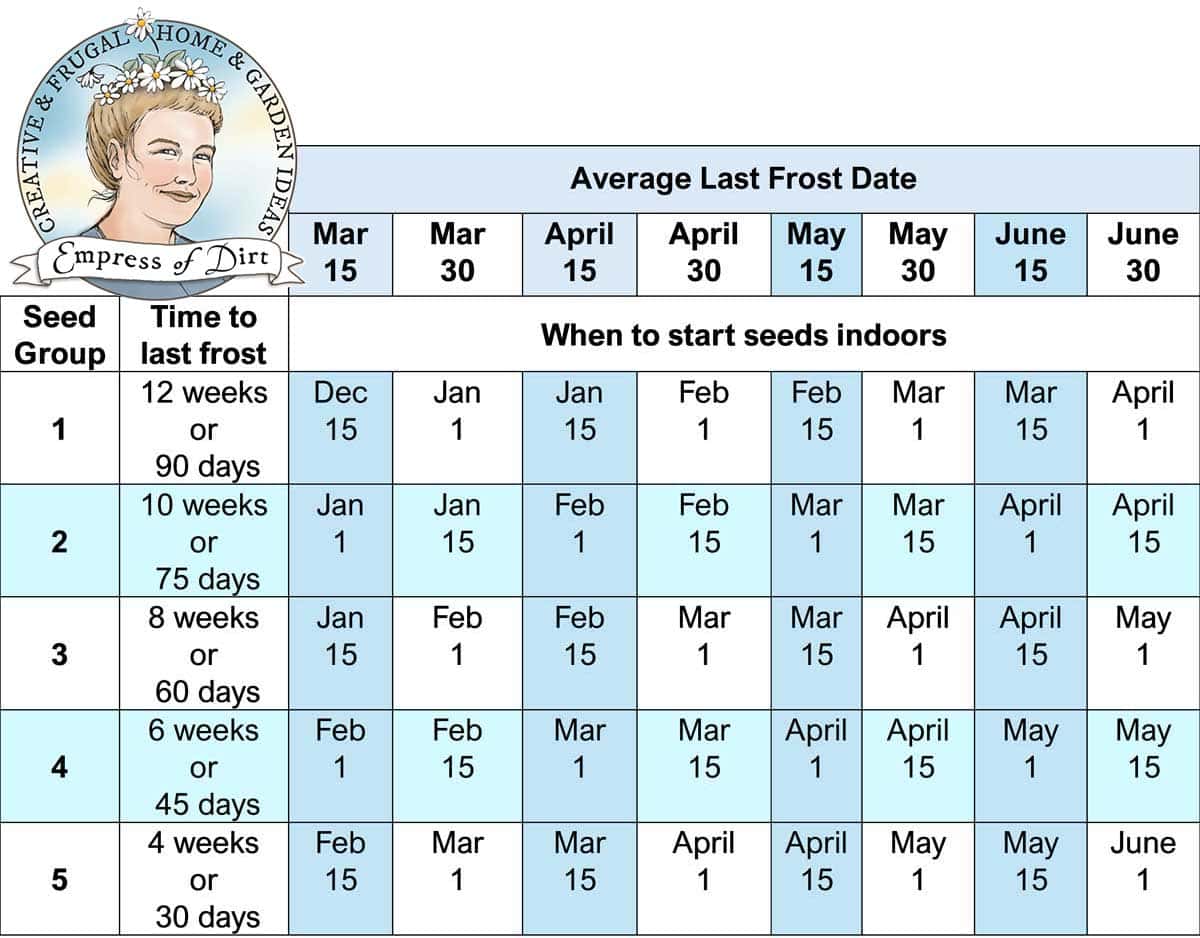
You can get a copy of this chart here:
Empress of Dirt
FREE TIP SHEET
Week-by-week Seed Starting Schedule
File includes seed starting plans timed in relation to your typical last frost date.
Pages are formatted so you can add your own notes.

Ebook

Seed Starting for Beginners
Sow Inside Grow Outside
by Melissa J. Will
Everything you need to get started with indoor seed starting for indoor and outdoor plants. Grow what you want—any time of year!
PayPal, Credit Card, Apple Pay
This ebook is a digital file (PDF format) you save to your device. It is not a physical product.
~Melissa the Empress of Dirt ♛