While it sounds smart to give seedlings extra time to grow indoors, it can cause big problems later on.
If you’d like a roadmap, this is the indoor seed starting schedule I follow to grow hundreds of new plants each year.
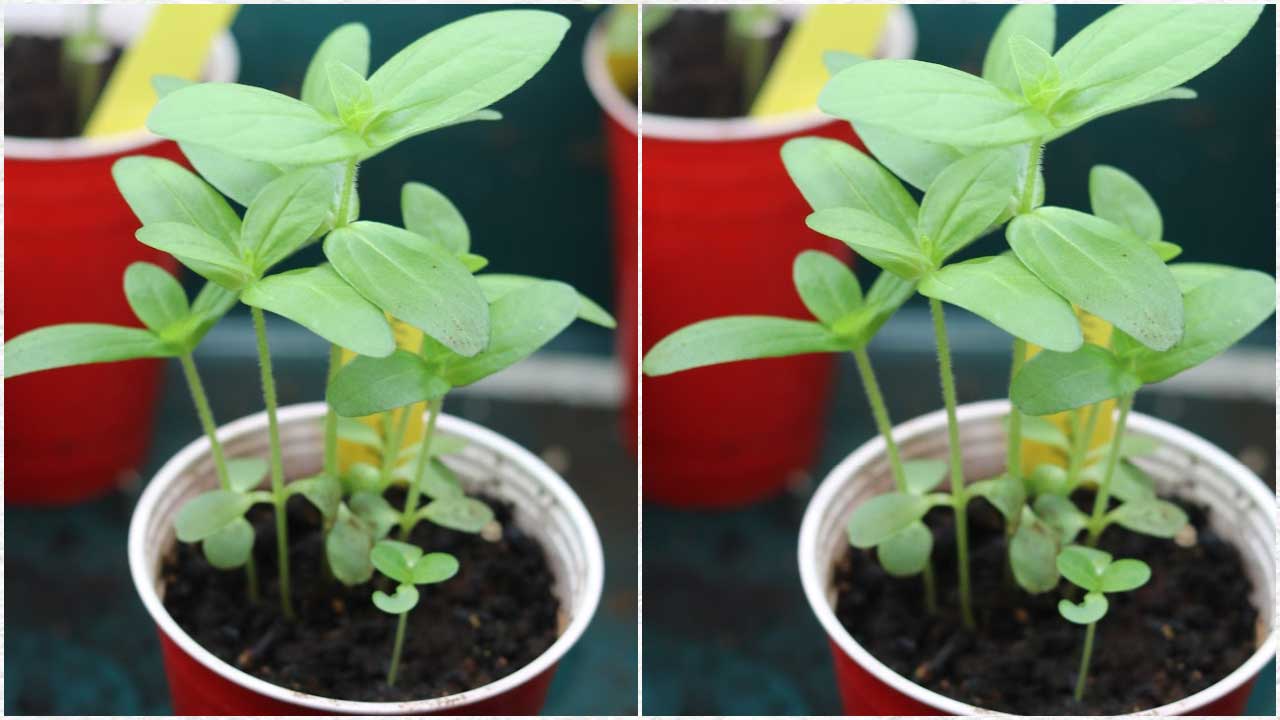
When Early is Too Early
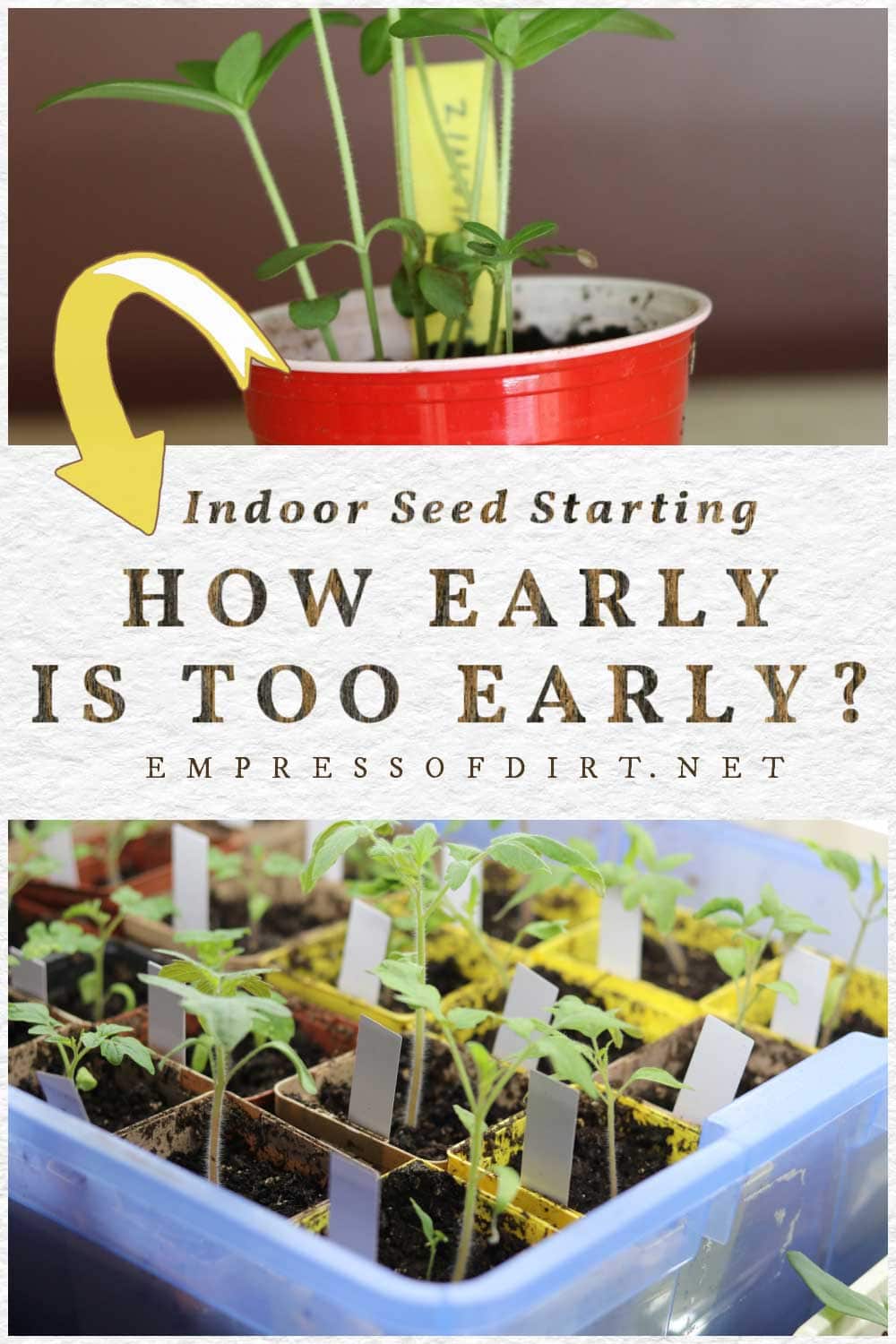
I’ll admit this is a classic case of “do as I say, not as I’ve done.”
Seed packets list recommended indoor sowing times for a reason. For most crops, that timing is given as a set number of weeks before your average last frost date.
Those guidelines are designed to produce sturdy seedlings that are the right size and stage for transplanting once the risk of frost has passed.
A few plants genuinely need a long head start—months before last frost—but most grow quickly. Starting them too early creates a chain of practical problems, and sometimes the plants don’t make it. Unless you have generous indoor growing space, it’s usually best to follow the suggested schedule.
Eager to Sow? Not So Fast!
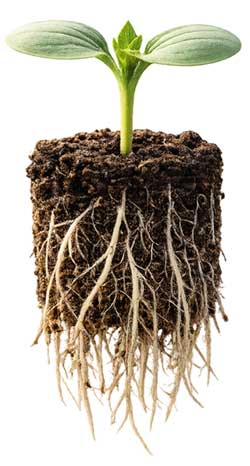
Just as you plan for the mature size of a tree or shrub—not the size it is at planting—you also need to picture how large your seedlings will be by the time they’re ready to move outdoors.
It’s sensible to sow extra seeds to allow for germination rates. But it’s just as important to rein in those numbers so you’re not left caring for more plants than you have space for indoors.
I’ll walk through some considerations.

Seedlings outgrow their containers or soil blocks
It can seem practical to fill every cell and make the most of the space in hopes of bigger yields.
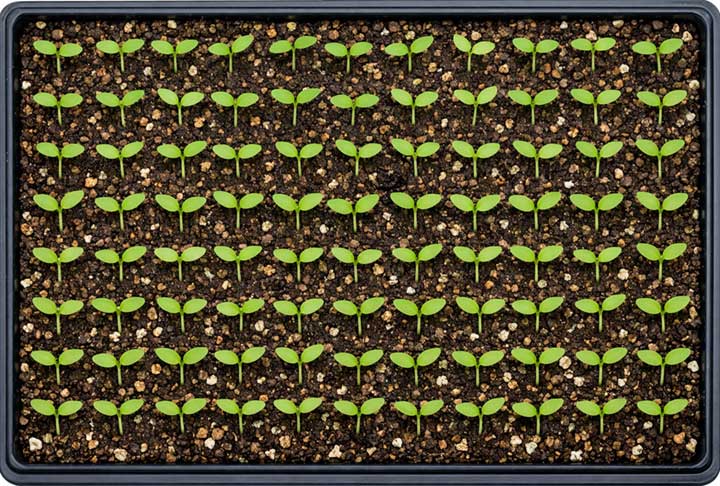
But if seedlings stay too long in their original trays or soil blocks, they begin to struggle.
With limited root room, they crowd each other, become rootbound, dry out more quickly, and need constant watering.
At that point, the fix is simple: transplant them to larger containers.
Bigger plants and pots need more width and height
Most of us transplant seedlings at least once before they head outdoors. But with each stage of growth, every plant needs more room.
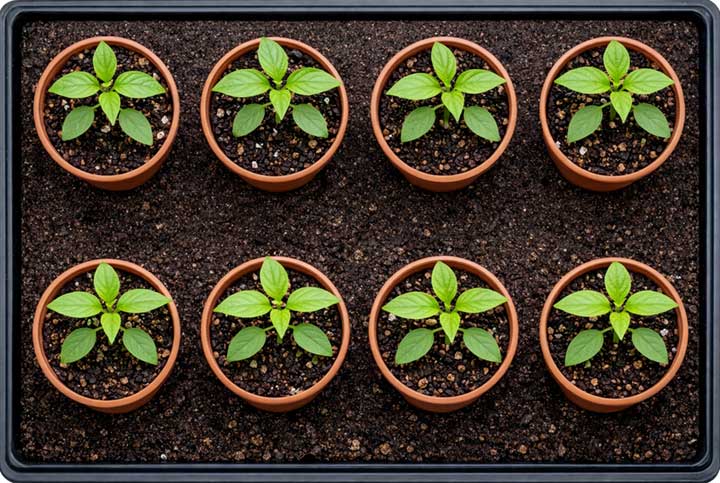
That tray that once held 100 seedlings under the grow lights? Before long, it’s replaced by a scattering of small pots taking up the same space.
Plants need more than extra width—they need height, too. You never want foliage pressed up against the lights. And if outdoor planting is still weeks away, another round of up-potting may be unavoidable.
It’s satisfying to grow plenty of healthy plants. But without enough indoor growing space, the whole setup quickly becomes difficult to manage.
You can see a soil blocking tool here on Amazon
Learn as You Grow
It took me a few indoor seed-starting seasons to get the timing right—and resist to temptation to sow fast-growing plants too early.
I also learned to base my sowing numbers on something practical: how many 3- to 4-inch pots I could actually fit on my plant shelves once everything was potted up.
There’s nothing more discouraging than watching a batch of seedlings struggle—or fail—because they’ve outgrown indoor life and it’s still too cold to plant outside.
Those seed packets really do offer useful guidance. When I follow the recommended sowing times and keep quantities in check, I end up with sturdy, well-sized plants ready to move outdoors at the right time.

Resources
Ebook

Seed Starting for Beginners
Sow Inside Grow Outside
by Melissa J. Will
Everything you need to get started with indoor seed starting for indoor and outdoor plants. Grow what you want—any time of year!
PayPal, Credit Card, Apple Pay
This ebook is a digital file (PDF format) you save to your device. It is not a physical product.
Find Your Frost Dates & Hardiness Zone
Plant Hardiness Zones |  United States |
  Canada
These are listed on seed packets and plant tags to guide your choices.
Average Frost Dates | Use this calculator at Almanac.com. Enter your city and state or province to find your first and last frost dates and number of frost-free days.
Ecoregion | Learn about local native plants, animal species, and environmental conditions to make garden choices that benefit your ecosystem.
Learn More: Understanding Frosts & Freezing For Gardeners
What is Days to Maturity?
Days to maturity or days to harvest is the average number of days a plant takes to reach maturity. Depending on the type of plant, this could be when a vegetable is ready to harvest or a flowering plant is in bloom. It’s a ballpark number to assist with planning.
While there’s no universal consensus, I use the following for my calculations.
- For seeds sown directly outdoors, counting begins after germination when the first true leaves appear.
- If seeds are started indoors, counting begins when they are transplanted outdoors.
Even then, it’s still just a guideline. Weather and growing conditions make a big difference. Plants can only grow so fast, even in ideal conditions. Excessive heat, drought, or other stress can slow or stall growth. Later in the season, shorter days and cooler temperatures also reduce growth rates.
Knowing the estimated days to maturity is most helpful for fruiting plants like tomato, zucchini, peas, or watermelon that need time to flower and fruit in the growing season.
It’s not really an issue for vegetables grown for the solely for their stems and leaves since they can be harvested at any time.
Empress of Dirt
FREE TIP SHEET
Week-by-week Seed Starting Schedule
File includes seed starting plans timed in relation to your typical last frost date.
Pages are formatted so you can add your own notes.

Listen
~Melissa the Empress of Dirt ♛