Ants may look like pests, but they play a valuable role in garden soil health and pest control. Here’s why you can stop worrying and let them be.
If ants are taking over your hummingbird feeders in their quest to find sugar, a water moat will stop them.
Why Do Gardeners Want to Get Rid of Ants?
This article is based an episode from our podcast,
Two Minutes in the Garden, titled Ants in the Garden: Harmful or Beneficial?
If you prefer to listen to this content, see the podcast player in Resources below.
Ants tend to trigger an automatic “ew!” response. They’re small, appear in big numbers, and yes—some species can sting or bite. So, it’s no surprise that gardeners often ask how to get rid of them, assuming they must be a problem.
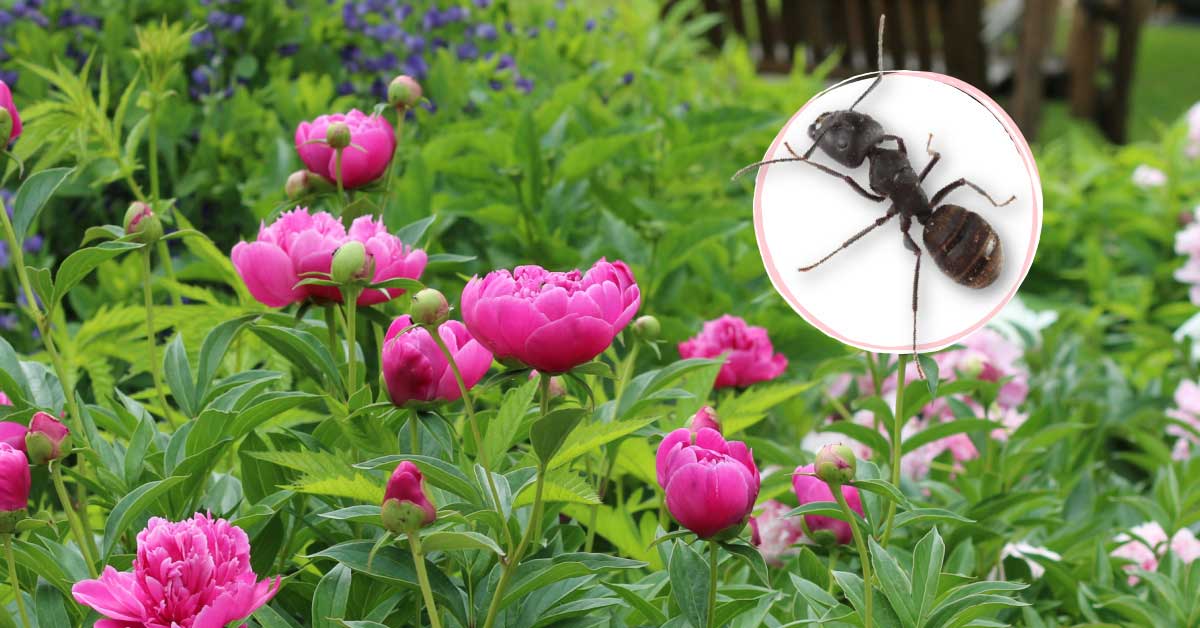
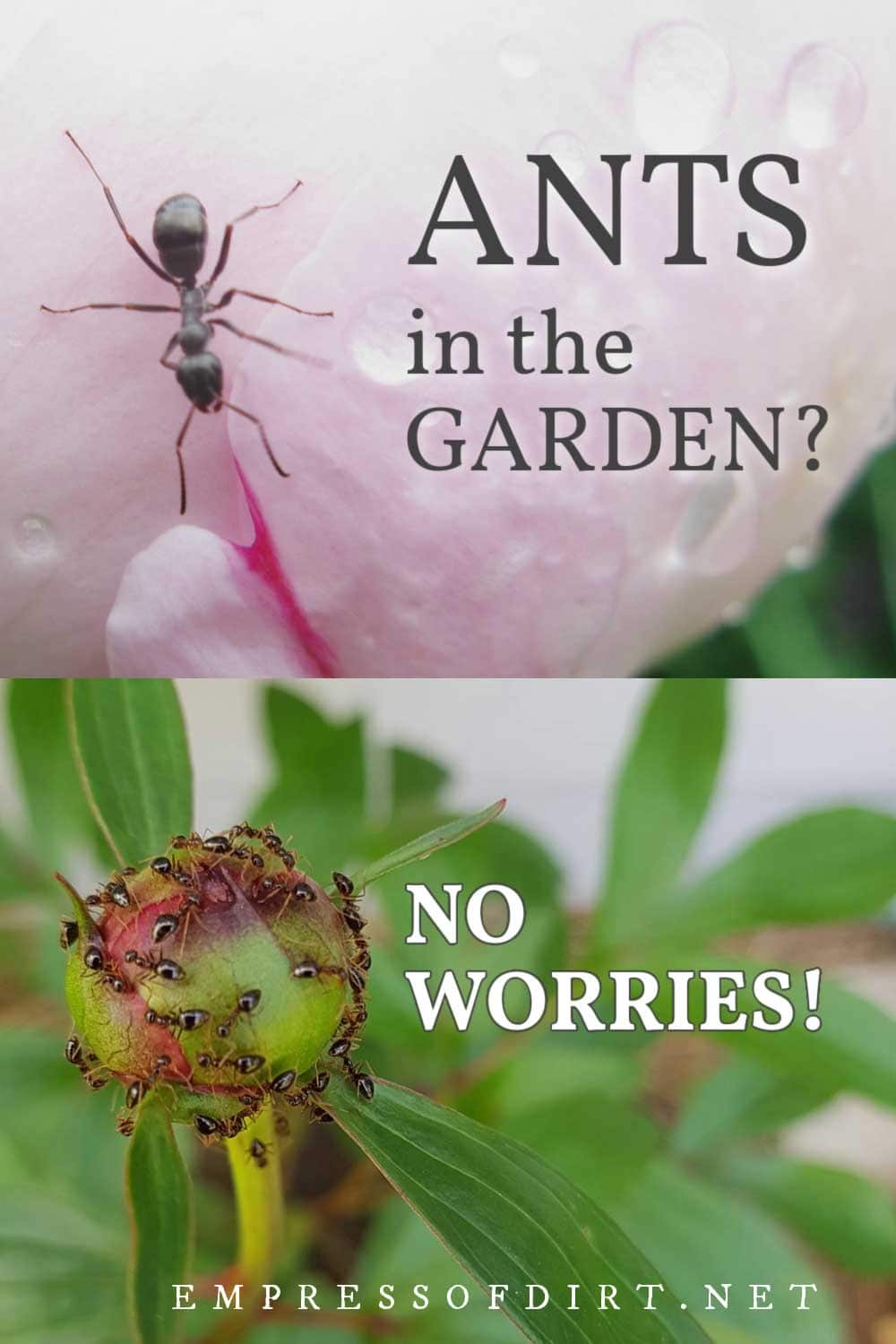
One common concern I hear about is ants “taking over” peony plants. And yes, it’s normal to see ants crawling all over the flower buds. But take a closer look—it’s just about food. The buds produce a sugary nectar that ants love, like a free candy shop. They’re not harming the plant, and those gorgeous blooms will still open as expected.
You might also see ants clustering around aphids on other plants. In that case, the ants are protecting the aphids from predators to collect the sugary honeydew they produce. It may look dramatic, but again, for the ants, the plant is just the stage, not the target.
Like many misunderstood garden residents, ants deserve a second look. Far from being pests, they’re playing important roles in the ecosystem, quietly contributing to soil health and nutrient cycling, and they’re a food source for plenty of other animals.
And really, their numbers are so vast, it’s wishful thinking to believe we could—or should—try to control them.

Ants 101
Ant Basics: What You May Not Know
- Ants are insects in the Hymenoptera order (alongside bees and wasps).
- All ants are social and live in colonies.
- A queen ant starts the colony, using sperm from one mating flight to fertilize eggs for years.
- Most ants are female workers; males have short lives.
- There are over 20,000 known species worldwide—including around 800 in the U.S.
- Researchers estimate there are at least 20 quadrillion ants on Earth—about 2.5 million per person!
What Ants Do in the Garden
While they may not be welcome in your kitchen, ants in your garden are usually not a problem. In fact, they help in several key ways.
Soil Health and Structure
- Ants aerate the soil as they tunnel through it, similar to worms.
- Their tunnels help improve water infiltration and root growth.
- Ants contribute to nutrient cycling and decomposition of organic matter.
- Ant waste, like worm castings, adds organic material to the soil.
Pest Control
- Ants eat many other insects, including some known garden pests.
- Though they also eat beneficial insects, the net result often benefits your plants.
- They are a food source for birds and other wildlife.
What About Ants and Aphids?
This is one of the few situations where ants may indirectly cause a problem.
- Ants “farm” aphids for their sweet honeydew, protecting them from predators.
- In doing so, they may help aphid populations persist longer than they otherwise would.
- However, ants will also eat aphids under certain conditions.
- Aphids themselves are often not as harmful as they look, and simple remedies (like hosing them off) usually suffice.
So while ants do interfere with aphid predators, they aren’t causing the aphid problem—they’re just trying to make use of it.
Concerns About Ant Hills
In some regions, ant mounds are so small they’re hardly noticeable. In others, they can reach over a foot tall, becoming a nuisance—especially when mowing the lawn.
Still, anthills in nature contribute to biodiversity by creating unique microhabitats for other soil organisms.
In the average garden, they’re not doing much harm—just altering the landscape slightly.
The Sting Factor: When Ants Are a Real Problem
Some ants sting. Most notably:
- Red Imported Fire Ants (originally from South America) are known for aggressive stinging and have spread throughout the southern U.S., parts of Australia, Europe, and Asia.
- European Fire Ants (in eastern Canada and northeastern U.S.) also sting but are less aggressive.
- Carpenter Ants don’t sting but can damage wooden structures.
If you’re living in an area with problematic fire ants or carpenter ants inside buildings, that’s different from basic garden presence. In most gardens, ants do little to no harm.
Frequently Asked Questions
Do Ants Pollinate Plants?
Ants do not pollinate plants in any meaningful way.
- While some researchers think ants are underrated pollinators, overall, ants are considered neutral or even slightly detrimental to pollination.
- In some cases, their presence on flowers may deter pollinators like bees.
That said, they are part of a long co-evolution with plants. Some plants have evolved nectar sources outside flowers and seed structures to attract ants—for defense and seed dispersal.
While you may not want ants moving seeds around in your garden (just like squirrels relocate flower bulbs), this shows that ants and plants generally coexist just fine.
Can You Get Rid of Ants If You Really Want To?
If you truly need to remove an ant colony, some slow-acting baits can help:
- Borax and sugar mixtures can be effective, mimicking the old arsenic + sugar methods but much safer. It can take a couple of weeks for it to work because you need a slow-acting poison so that it can make its way around the whole colony before they realize that something’s wrong.
- Commercial bait stations work on the same principle.
- Erythritol, a sweetener, has shown promise as an ant insecticide in studies—but it may harm plants too.
But before trying any of these, do your homework and ensure you will not cause other harm.
Other popular remedies like cinnamon, diatomaceous earth, boiling water, or aspartame have limited or debunked effectiveness. Many are not targeted and may harm beneficial insects as well.
And, even if you do remove a nest, remember: with 20 quadrillion ants in the world, they’ll be back.

Summary
Just Leave Them Be
Ants are often misunderstood and unnecessarily vilified.
In the garden, they:
- Improve soil structure.
- Help decompose organic matter.
- Control pest insects.
- Feed wildlife.
- Coexist with plants in long-standing relationships.
Unless you’re dealing with stinging ants that are harming people or structures, there’s no need to eliminate them.
In fact, the best thing you can do is simply let them be. They’re doing their part in the garden ecosystem—even if we don’t always notice.

Resources
Listen
Read More
The gardening world has a habit of singling out certain animals as villains. Earthworms, for example, were once seen as a nuisance but are now widely recognized for their benefits.
Want Pollinators in Your Garden?
- Choose plants, trees, and shrubs used by local wildlife for food and habitat during all stages of life. Options will be different in each growing region.
- Avoid products like pesticides that are toxic to pollinators and other animals in the food chain.
- Keep it natural: sustainable gardens are not tidy. Dead and decaying things nourish living things.
Might your neighbors object? This shares how to warm them up to the idea.

Phenology (The MIT Press Essential Knowledge series)
by Theresa M. Crimmins
On the timing of seasonal activity in plants and animals, the impact of climate change, and what each of us, as everyday phenologists, can do to help.
~Melissa the Empress of Dirt ♛