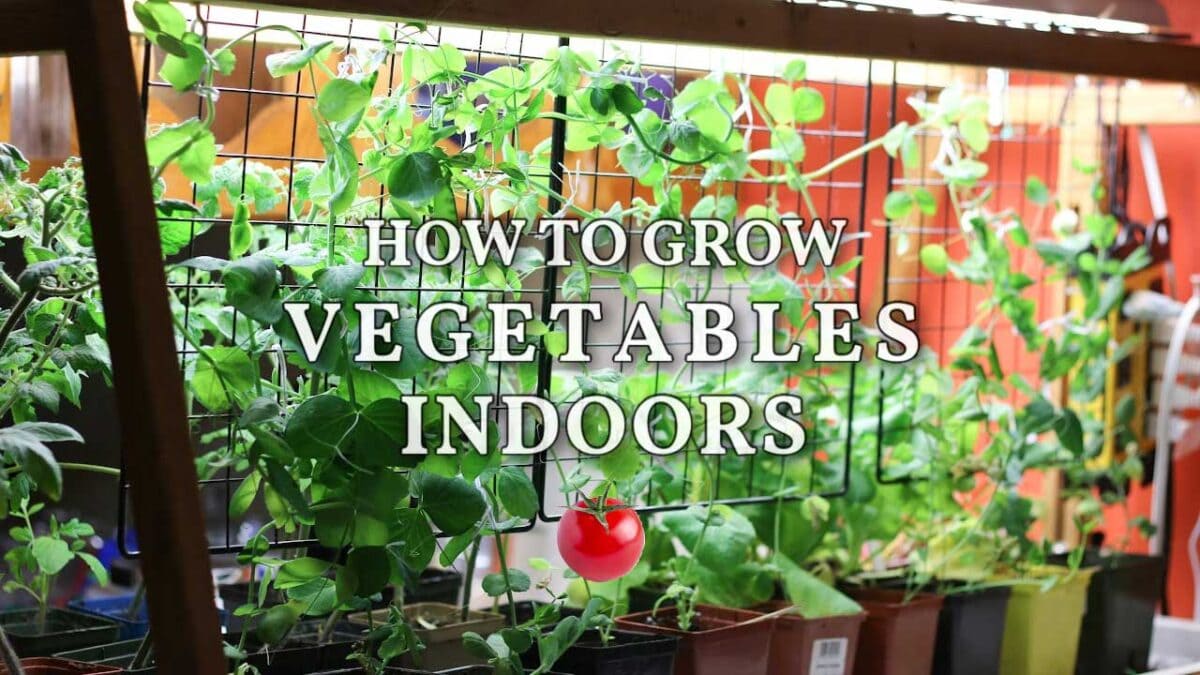
Yes, you can grow vegetables indoors including lettuces, arugula, spinach, kale, carrots, radishes, beet greens, tomatoes and more. Best of all, it can all be done with basic shop lights.
Most of the recommended indoor food plants can be started from seed using these step-by-step instructions.
Growing Vegetables Indoors

Can you grow vegetables indoors year-round?
Yes, you can grow a variety of vegetables indoors at home all year-round.
I discovered the world of indoor food growing completely by surprise. I’ve always started seeds indoors for transplanting outdoors in late spring but one year the weather was so cold I had to keep all the seedlings indoors much later than usual.
And this included peas. I don’t normally start peas indoors because they do nicely with direct sowing outdoors in spring but I had started pots of them for fun indoors and this ended up changing my gardening world.

Much to my surprise, my indoor pea seedlings kept growing, forming vines around my grow light shelves, and eventually flowering and producing pea pods. Amazing!
Until then, I would have never thought it was possible.
Since then, I have grown dozens of different vegetables, herbs, and some fruits in my house initially with fluorescent shop lights and more recently with LED lights (Amazon).
And (bonus) it doesn’t require any more space than houseplants so it’s totally do-able in apartments or the corner of a living room.
But, while you can grow many foods indoors, don’t expect to lower your grocery bill.
While some crops like leafy greens, sprouts, and microgreens grow quickly and easily indoors, many other food crops are very slow growing indoors and low yield—if they flower or fruit at all.

Start with the Easy Ones
Anything we grow for edible leaves or stems are the easiest because they can be harvested at any time.
Cool-tolerant, leafy, salad greens like spinach, kale, or arugula grow quickly (4 to 6 weeks) and easily in compact spaces. They are reliable and easy to do.
Slow-growing foods like tomatoes, cucumbers, and peppers must flower and fruit and require more space, full-spectrum lights, and optimum conditions over a longer period of time to reach harvest.
And some things are impossible. Producing a giant cabbage or ear of corn would be an indoor garden feat so don’t believe the crazy claims you read online. Even if you could grow a cabbage, by the time it was ready for harvest, that would be one very expensive cabbage! Just stick with the proven easy-growers and you’ll be enjoying salads grown in your home in no time.
To get started, I’ll show you the basics, list which seeds to try, and show you my low-cost setup including the lights I like (cheap).
Indoor food growing is a really fun way to experiment with plants and enjoy some of the best salad greens ever, perhaps with a few cherry tomatoes on top.
Contents
Plant Choices
What vegetables can be grown indoors?
Many different veggies, herbs, and fruits can be grown indoors anytime including winter. But you do have to choose the right plants and provide the right conditions.
I’ll show you what I have had success with.
1Cool-tolerant Veggies

- Moderate Light – 12 Hours a Day
- Recommended temperature: 60°F/15°C
I’ve generalized the recommended temperatures since we can’t provide the exact preferred environment for each individual crop. If your room stays around the average room temperature of 70°F/20°C, it should be fine. If it’s a bit lower, even better.
- Arugula
- Beets (greens, tiny roots)
- Broccoli (stalks, greens only)
- Brussels sprouts (stalks, greens only)
- Carrots (tiny but sweet)
- Kale
- Leafy greens (not head lettuces)
- Mache (corn salad)
- Microgreens (edible seedlings)
- Mustard greens
- Peas
- Radish
- Sorel
- Spinach
- Swiss chard
- Watercress
This has tips for growing leafy greens indoors and I’ve shared more fast-growing indoor vegetable ideas here.
Mail Order Seeds
- SeedsNow (US Shop & Shipping)
- High Mowing Organic Seeds (US Shop & Shipping)
- West Coast Seeds (Canadian Shop | US & CAD Shipping)

2Herbs

- Moderate to High Light 12-16 Hours a Day
- Recommended temperature: 70°F/20°C
Herbs really do prefer life outdoors and most like a lot of sun. But, with good lights and patience you can grow several varieties indoors. It may be hit and miss, but if you like the challenge, go for it.
I find basil does best with its roots in water for a while instead of trying to grow it in a pot.
- Basil
- Oregano
- Peppermint
- Rosemary
- Sage
- Spearmint
- Thyme
This step-by-step tutorial shows how to grow rosemary from cuttings.

3Warmth-Loving Vegetables

- Full Sun or Full-spectrum Lights 14-20 Hours a Day
- Recommended temperature: 70°F/20°C
I rate these ones as mostly for fun rather than any substantial amount of food.
Popular choices to try:
- Eggplant
- Tomato
- Strawberry
- Peppers
- Citrus trees | Dwarf varieties (start with a grafted tree)
Any crop that must flower and set fruit to produce food needs full-spectrum lights and often some help with pollination indoors. Even when pollination might happen on its own, I always hand-pollinate to be sure. A fine paintbrush works well for this—just move pollen from flower to flower so it reaches the stigma. This has more on plant reproduction if you need a refresher.
Tomatoes are a good place to start. I take cuttings from my outdoor plants at the end of the season and grow them indoors through winter—sometimes year-round. You can also start tomatoes from seed, of course; it just takes longer. Conventional advice says to grow cherry tomatoes indoors but I’ve had success with all sizes—and it’s so fun when it works.
I haven’t grown strawberries or peppers indoors myself, but others have had success with both.
Cucumbers are another option for patient (or ambitious) growers. The larger the fruit, the longer it takes to develop—usually much longer than it would outdoors.
Overall, I think of most indoor fruiting crops as more for fun than for food, at least in terms of meaningful harvests.
Always check the pollination needs of whatever you’re growing so you know what kind of help it requires indoors.

Indoor Food Growing Supplies
What supplies do I need to grow food indoors?
Here are things to consider with indoor growing:
- Light – low-medium to high depending on what you’re growing
- Growing medium – organic potting mix for veggies
- Containers with drainage holes and saucers or drip trays
- Humidity – 40 to 50% range is fine for most indoor crops
- Water – use distilled water if yours is hard or heavy in salts
- Air circulation – use an electric fan to help prevent mold and fungus, assist pollination
- Temperature – 60°F/15°C or 70°F/20°C range depending on plants – consistent, not drafty
- Fertilizer – your soil will need feeding as the plants grow

Lights
How much light do you need to grow vegetables indoors?
- Regular Grow Lights for seed starting and quick-growing, cool-tolerant crops like lettuces:
Fluorescent Shop Light or LED grow light - Full-spectrum Grow Lights for warmth lovers like tomatoes and cucumbers that need to flower and fruit.
Full-spectrum LED grow lights or CMH Grow Lights
Artificial grow lights are recommended for indoor food growing. Natural light can help, but it’s often not enough—especially in winter. You can absolutely combine the two if that suits your setup.
The fast-growing, cool-tolerant vegetables listed in Group 1 grow well with moderate light and temperatures around 60°F (15°C). A sunny, south-facing windowsill or shop lights placed 12–16 inches above the plants usually does the trick. I’ve used T5 and T8 warm and cool fluorescent bulbs in basic shop light fixtures in the past, and now I use Barrina LED lights.
Group 2 herbs vary. Some are fine with shop lights, while others prefer stronger light and warmer conditions.
Group 3 fruiting plants like tomatoes need more: full-spectrum lights, warmer temperatures (but not too hot), and a light source positioned close—about 6–12 inches above the plants once they’re established. CMH (ceramic metal halide) lights offer strong output without high electricity use. That said, I’ve also ripened cherry and indeterminate tomatoes indoors using only natural light. It’s not the most efficient method, but it can work.
Ultimately, choosing lights comes down to budget, energy use, and the quality of light (color and intensity) and if you need the plants to flower and fruit.
Tip: If you’re just buying one type of light, get full-spectrum lights so you’re covered. They are pricier but fine for all indoor crops as well as indoor flowering tropical plants
If you’re just growing Group 1 crops, basic LED lights are fine.
Indoor Kits
If you just want to try a small collection of plants and don’t mind the cost, these kits like the Sunblaster Grow Light Garden work nicely.
Recommended Book
If you want to use something other than basic fluorescent lights:
Gardening Under Lights: The Complete Guide for Indoor Growers
by Leslie Halleck
There are numerous types of plant lights and the market is always changing.
This book is a good primer for understanding light and determining which lighting products you might like for your indoor garden.
Potting Mix
I use a basic seed starting mix for starting plants from seed and then transfer the seedlings into organic potting mix made for vegetables when they have a few leaves.
It’s important to use new potting mix and not garden soil or leftover soil from other plants if you want to avoid transmitting or transferring pests or diseases.
If you are starting with plants from the garden nursery, grab a bag of organic potting mix because they will need to go into bigger pots when you get home.
Because there is no nutrition in potting mix, we will use a fertilizer after the seedlings are well-established.
Containers
It’s very helpful to group your plants by light needs and mature plant sizes because you’ll need to keep the lights just above their tops. You can find this information on the seed packets and plant tags.
Your indoor veggies will need containers with room for root growth and drainage holes.

I like these flower pots with saucers but always shop your own home first!
What size you’ll need will depend on what you’re growing.
I like to use long, plastic window boxes for leafy greens (approximately 8-10-inches deep) because the size suits just about everything.
But any pots of the required depth will be fine too.
Also, keep each crop in its own container so it’s easy to move things around as needed.
Humidity & Water
Low humidity—especially during winter when indoor heating dries the air—can be hard on houseplants.
While misting with water feels helpful, research shows it doesn’t actually raise humidity in a meaningful way. If your indoor air is very dry, a humidifier is a much better option. Aim for around 50% relative humidity to keep most indoor plants happy.
To keep the potting mix moist, use a household watering can with a long, narrow neck to easily apply the water right where you need it, directly into the soil or saucer.
If the quality of your tap water is a concern, you may need to boil and cool it first or use distilled water.

Air Circulation
Good air circulation helps prevent problems like pests, mold and fungus growth. It can also help with pollination.
I keep an electric fan by my indoor seedlings and vegetables. It’s run on a mechanical timer for a few hours each day.
Getting Started

How do I start growing vegetables indoors?
Plant Choices
Plants with edible stems and leaves are quick and easy to grow indoors.
Fruiting plants are slower and require extra supplies and care.
Decide what you want to grow based on the growing conditions you can provide.
Light (natural and grow lights) and room temperatures can determine what you’ll grow where.
If you have pets that may try to eat the plants or dig in the pots, that’s another thing to consider.
I recommend beginning with Group 1: cool-loving plants that require moderate light.
Any leafy salad greens including spinach, kale, and arugula are easy to grow and ready in weeks.
Start plants from seed using these instructions or get transplants from a garden nursery.
Organize crops by light needs and mature height. Leafy greens do well together; peas climb and should be potted separately with room for trellis.
Set up growing space including grow lights, containers, fan and electrical timers.
How long you’ll need your lights on will depend on the natural light available and your plants.
Start with the recommended amounts and adapt as needed.
Maintenance
Check your plants daily to be the sure the lights and fan are working, soil is moist (not damp or dry), and there are no signs of stress or pests.
It’s common to need to move plants closer to or farther away from the lights depending on how they are doing.
Some food plants like tomatoes may need help with pollination. When pollen is visible in the flowers, I use a fine artist paint brush and dab each flower to distribute it from flower to flower. Sounds simple but it seems to work. Tomatoes have what are called “perfect” flowers with stamen and stigmas, but they usually need help getting the pollen where it needs to go.
Fertilize
Fertilize with an organic, liquid or granular fertilizer (fish or seaweed are two options) and follow instructions on product. Granular fertilizers are much less expensive (per dose) because you’re not paying to ship water.
- Group 1 | Leafy Greens : Monthly
- Group 2 | Herbs : Monthly
- Group 3 | Fruiting Plants : Every two weeks
Harvest
If the edible part of a plant is the stem or leaves, you can harvest them any time. Some leafy greens are cut-and-come again (regrow) so you can use the outer leaves and the inner ones will continue to grow.
Herbs are harvested as needed, removing small amounts for cooking, leaving the rest of the plant to continue growing.
For fruits, look up the days to maturity to know when to anticipate harvest time. Depending on the lighting, this may take longer than the seed packets say.
Timing
When should I start growing vegetables indoors?
Any time!
Summer means you will have more natural light available which may reduce how long you run your grow lights each day.
Winter is my favorite time because it’s incredibly cheerful to have a tray of fresh, delicious salad greens growing when it’s snowing outside.
Resources
Supplies
- My Indoor Growing Setup – recommended supplies
Recommended Books

LED Grow Lights
Recommended LED Lights
Seedlings | Barrina Super Bright White LED Lights | Amazon
These lights work nicely for indoor seed starting and growing young plants until it’s time for outdoor transplanting.
Indoor Flowering & Fruiting | Barrina Full-Spectrum LED Lights | Amazon
If you need lights for long-term growing including plants that can flower and fruit indoors, choose full-spectrum bulbs. You can also use these for seed starting.
- Growing Salads Indoors | Melissa J. Will | ebook now available
- Gardening Under Lights | Leslie Halleck | If you want to try more than sunlight or fluorescents.
- Indoor Kitchen Gardening | Elizabeth Millard
And there you go! I hope you will try growing food indoors. It’s the fun of houseplants with the bonus of food!
~Melissa the Empress of Dirt ♛
